Jean-Baptiste TREBBIA
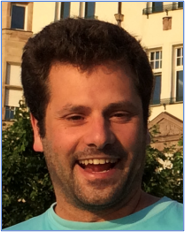
Senior CNRS Researcher
Phone : +33 (0)5 57 01 72 40 (office), +33 (0)5 57 01 71 98 (lab)
Address: LP2N- Institut d'Optique d'Aquitaine 1, Rue François Mitterand F-33400 Talence Cedex, France
EDUCATION AND PROFESSIONAL EXPERIENCE
- 2023 : Habilitation à Diriger des Recherches HDR, Université Bordeaux, University of Bordeaux, “Super-resolved spectroscopies and imaging from individual nano-objects to entangled molecular pairs.”
- 2020 : Authorization to supervise PhD theses (Habilitation to Supervise Research), University of Bordeaux.
- 2011-… : CNRS Research Scientist (Chargé de Recherche) at LP2N. Promoted to First Class in 2012.
- 2008 – 2010: CNRS Research Scientist (Chargé de Recherche) at CPMOH.
- 2007 – 2008 : Postdoctoral researcher at CPMOH, in the group of Brahim Lounis, “Study and realization of indistinguishable single-photon sources.”
- 2004 – 2007 : PhD from Université Paris XI Orsay, supervised by Christoph Westbrook, defended on October 17, 2007, « Study of quasi-one-dimensional degenerate quantum gases confined by a microstructure.» with honours
- 2002- Janv 2004 : Apprenticeship training at CEA-Leti, Grenoble
- 2000 - 2003 : Engineering degree from École Supérieure d’Optique, Orsay
TEACHING
Regular teaching at Master’s Research level (EUR Light):
- -Super-resolution course (6 hours per year for Master 2 students), 2021–2024
- -“Lab Programming” course (40 hours per year for Master 2 students), 2021
Regular teaching at the Institut d’Optique Graduate School:
- -Tutorials in advanced optical design (12 hours per year), Master 1 level, since 2024
- -Tutorials in computer-aided optical design (12 hours per year), Master 1 level, 2024–2025; to be increased to 30 hours in 2026
- -“Project Lab”: Introduction to LabVIEW programming (32 hours), Master 1 level, 2015–2018
- -“Project Labs”: Digital Electronics and Optics, a course I initially designed and developed (40 hours per year), first taught in 2019 and renewed annually (2019–2024), as well as supervision of engineering students during their apprenticeship training (2nd and 3rd years, 7 hours per year) since 2019.
-
-
PUBLICATIONS (2025 → 2004)
2025
Juan-Delgado, A. et al. Addressing the correlation of Stokes-shifted photons emitted from two quantum emitters. Phys. Rev. Lett. 135, 163602 (2025).
2024
Juan-Delgado, A. et al. Tailoring the statistics of light emitted from two interacting quantum emitters. Phys. Rev. Res. 6, 023207 (2024).
Bézard, M. et al. Unveiling the high quantum efficiency of single silicon-vacancy centers through dielectric tuning of their local environment. AVS Quantum Sci. 6, 033401 (2024).
Nassoy, J. et al. The water bottle flipping experiment: a quantitative comparison between experiments and numerical simulations. Eur. J. Phys. 45, 065001 (2024).
2023
Tamarat, P. et al. Universal scaling laws for charge-carrier interactions with quantum confinement in lead-halide perovskites. Nat. Commun. 14, 229 (2023).
Thakur, S. et al. High-resolution optical imaging of single magnetic flux quanta with a solid immersion lens. Opt. Express 31, 24194–24202 (2023).
Deplano, Q. et al. Sub-nanosecond coherent optical manipulation of a single aromatic molecule at cryogenic temperature. AVS Quantum Sci. 5, 043401 (2023).
2022
Trebbia, J.-B. et al. Tailoring the superradiant and subradiant nature of two coherently coupled quantum emitters. Nat. Commun. 13, 2962 (2022).
2020
Rochet, A. et al. On-demand optical generation of single flux quanta. Nano Lett. 20, 6488–6493 (2020).
Tamarat, P. et al. The dark exciton ground state promotes photon-pair emission in individual perovskite nanocrystals. Nat. Commun. 11, 6001 (2020)
2019
Tamarat, P. et al. The ground exciton state of formamidinium lead bromide perovskite nanocrystals is a singlet dark state. Nat. Mater. 18, 717–724 (2019).
Trebbia, J.-B. et al. 3D optical nanoscopy with excited-state saturation at liquid helium temperatures. Opt. Express 27, 23486–23496 (2019).
2018
Fu, M. et al. Unraveling exciton–phonon coupling in individual FAPbI₃ nanocrystals emitting near-infrared single photons. Nat. Commun. 9, 3318 (2018).
2016
Veshchunov, I. S. et al. Optical manipulation of single flux quanta. Nat. Commun. 7, 12801 (2016).
2015
Yang, B. et al. Optical nanoscopy with excited-state saturation at liquid helium temperatures. Nat. Photonics 9, 658–662 (2015).
Veshchunov, I. S. et al. Direct evidence of flexomagnetoelectric effect revealed by single-molecule spectroscopy. Phys. Rev. Lett. 115, 027601 (2015).
Yang, B. et al. Polarization effects in lattice-STED microscopy. Faraday Discuss. 184, 37–49 (2015).
2014
Yang, B. et al. Large parallelization of STED nanoscopy using optical lattices. Opt. Express 22, 5581–5589 (2014).
Yang, B. et al. Using optical lattices for STED parallelization. Proc. SPIE 9169, 23–28 (2014).
2011
Louyer, Y. et al. Efficient biexciton emission in elongated CdSe/ZnS nanocrystals. Nano Lett. 11, 4370–4375 (2011).
2010
Trebbia, J.-B., Tamarat, P. & Lounis, B. Indistinguishable near-infrared single photons from an individual organic molecule. Phys. Rev. A 82, 063803 (2010).
2009
Trebbia, J.-B. et al. Efficient generation of near-infrared single photons from the zero-phonon line of a single molecule. Opt. Express 17, 23986–23991 (2009).
2008
Bouchoule, I., Trebbia, J.-B. & Garrido Alzar, C. L. Limitations of the modulation method to smooth wire-guide roughness. Phys. Rev. A 77, 023624 (2008).
2007
Trebbia, J.-B. et al. Roughness suppression via rapid current modulation on an atom chip. Phys. Rev. Lett. 98, 263201 (2007).
2006
Trebbia, J.-B. et al. Experimental evidence for the breakdown of a Hartree–Fock approach in a weakly interacting Bose gas. Phys. Rev. Lett. 97, 250403 (2006).
Estève, J. et al. Observations of density fluctuations in an elongated Bose gas: ideal gas and quasicondensate regimes. Phys. Rev. Lett. 96, 130403 (2006).
Westbrook, C. I. et al. Producing and detecting correlated atoms. AIP Conf. Proc. 869, 181–187 (2006).
2005
Estève, J. et al. Realizing a stable magnetic double-well potential on an atom chip. Eur. Phys. J. D 35, 141–146 (2005).
Schumm, T. et al. Atom chips in the real world: the effects of wire corrugation. Eur. Phys. J. D 32, 171–180 (2005).